Prevent Pallet Racking Collapse,
Protect Your Warehouse
Understand the dangers of pallet racking accidents and how to mitigate them with Rack Sentinel.
If you answer 'yes' to any of below, Rack Sentinel is for you:
Your warehouse stores pallets that have varying weights.
Your pallet racking comes from different manufactures.
You store different size pallets and/or different pallet types.
You purchased used racking for your warehouse.
Uncertainty as to what your pallet weights will be in the future.
Many repairs and replacements have been done to your pallet racking.
Your pallet racking gets occasionally damaged by lift operators or other equipment.
The Hidden Dangers of Pallet Racking Systems
Pallet racking systems are engineered structures designed to hold heavy loads. When not properly installed, maintained, or used, they become susceptible to failure. Factors contributing to racking collapses include overloading, improper assembly, lack of regular inspections, and impacts from forklifts or other machinery. The domino effect of a racking collapse can be catastrophic, causing extensive damage to inventory, equipment, and posing severe risks to personnel within the vicinity.
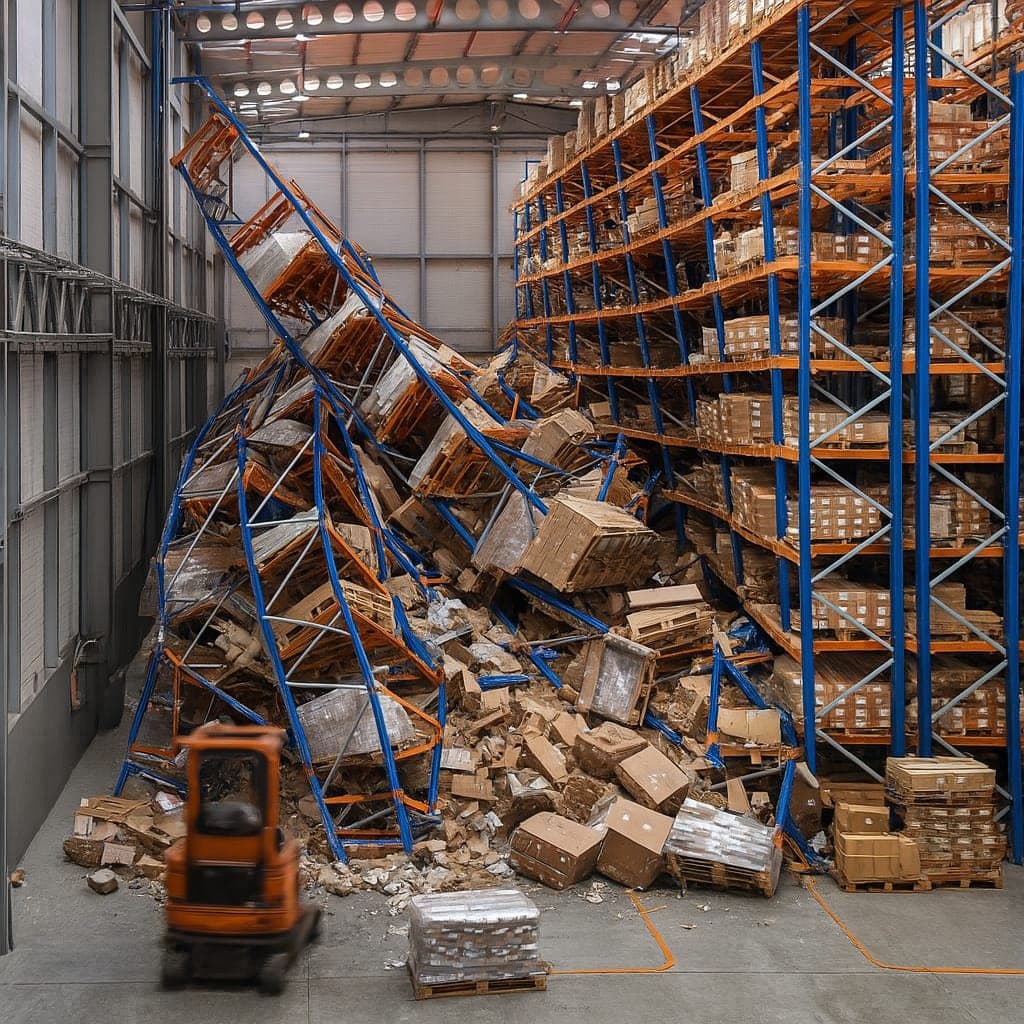
Forklift Impact
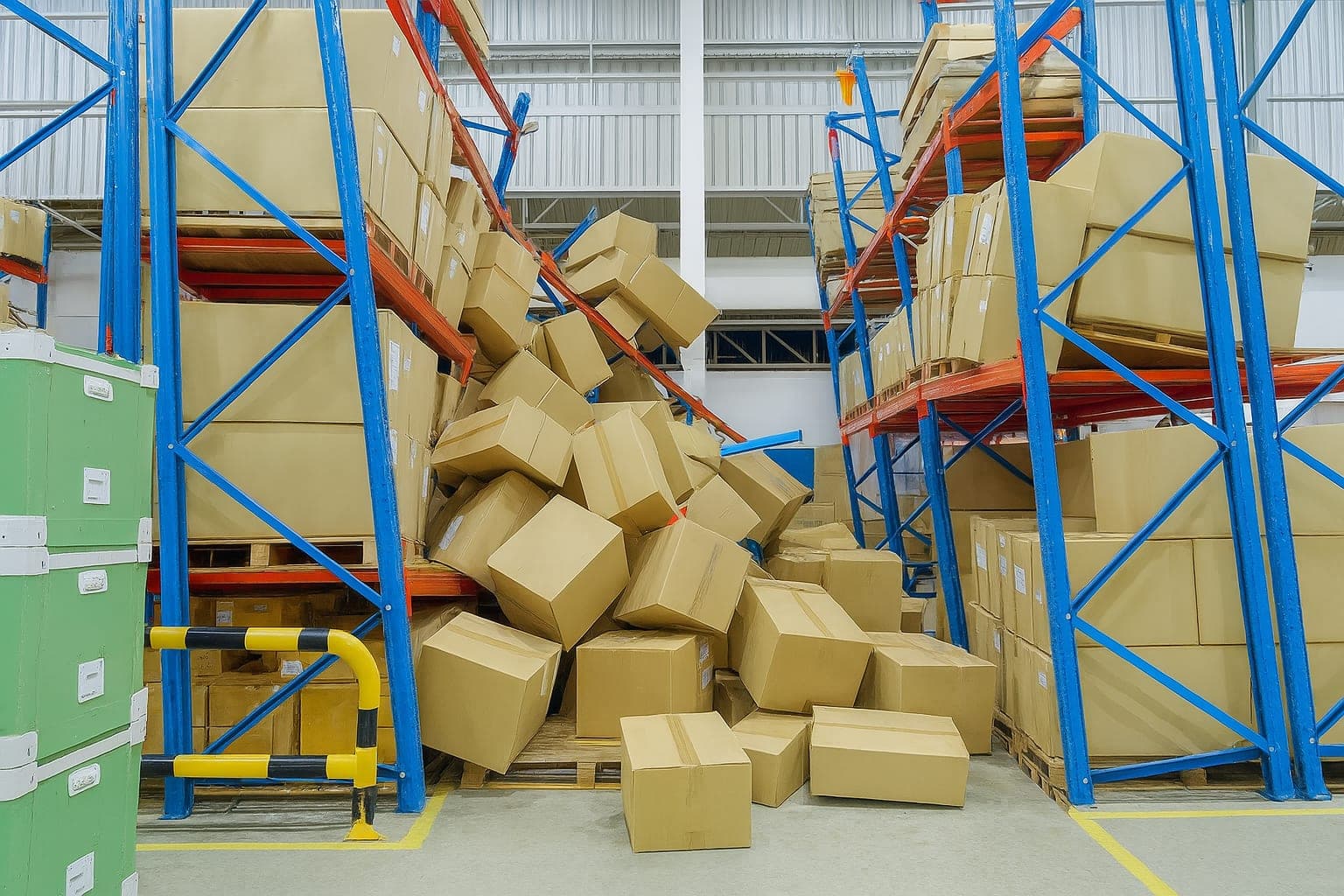
Overload Failure
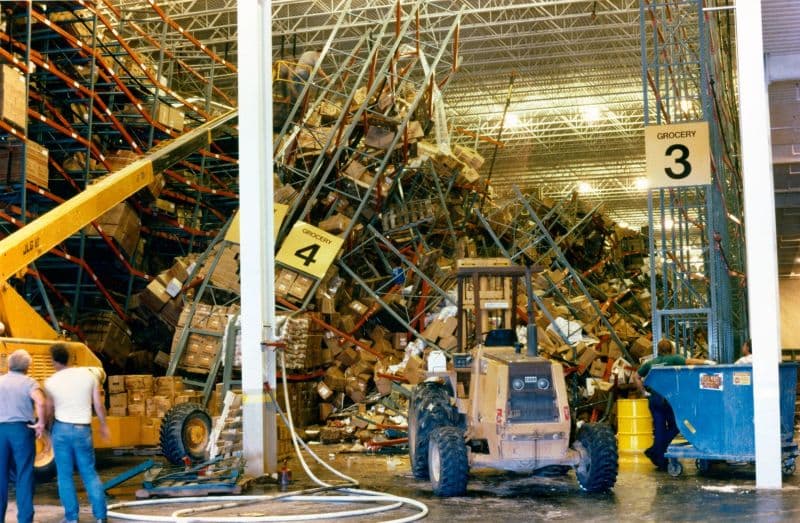
Domino Effect
Inventory Loss
How Pallet Rack Failures Actually Happen
Most rack collapses are not single dramatic events. They are the end of a quiet sequence: an upright takes a lift-truck strike at the base plate, an aisle gets reorganized with heavier SKUs than the original load chart, a beam picks up a slow deflection that nobody notices until the next quarterly walk-through. By the time a frame fails, the warning signs have usually been visible — and ignored — for weeks.
The common failure modes are well documented: overload from SKU mix changes that outpace the rack’s rated capacity; forklift impact at uprights and base plates, especially in high-turn aisles; out-of-plumb and out-of-straight uprights that shift the load path and concentrate stress at weld points; missing or damaged safety hardware like footplates, row spacers, and beam connectors. ANSI MH16.1 and RMI guidance, along with OSHA pallet rack requirements, call for visual inspections at least annually, plus an immediate post-impact inspection any time a rack is struck.
What continuous monitoring catches that walk-throughs miss
An annual or even monthly inspection is a snapshot. It tells you the state of the rack on the day someone walked it with a clipboard. It does not tell you that a beam crept past its deflection limit at 2 a.m. on a Tuesday, that a freezer aisle has been running 15% over its load chart for the last six weeks, or that an upright started leaning the day after a forklift clipped it. Continuous, sensor-based monitoring closes that gap — it catches the slow drift between inspections, flags the overload the moment the pallet lands, and routes the alert to the named safety contact before the rack ever gets to the failure threshold.
Why Awareness Matters
A lack of training, inadequate inspections, and complacency in safety protocols are some of the root causes of pallet racking accidents.
The consequences?
Financial losses
Legal liabilities
Reputational damage
Human casualties
Transform Your Warehouse Today
Learn more about this simple yet effective solution, and see why it's an essential investment for your company's future safety and security.
Request a Demo